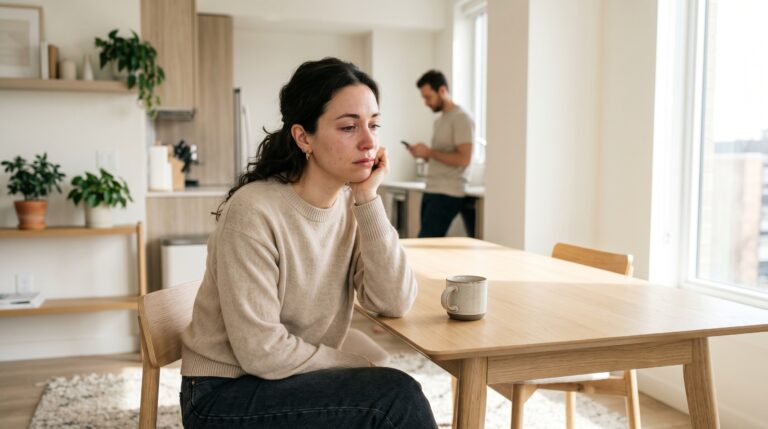

My Husband Doesn’t Respect Me: 8 Powerful Ways to Change It
When your husband doesn’t respect me has become a thought you carry daily, something fundamental in your marriage is broken, and it won’t repair itself without honest attention.
Respect is not optional in a healthy marriage. It’s structural. It’s the foundation on which everything else, communication, intimacy, trust, partnership depends. A marriage without mutual respect is not a marriage functioning at its full potential. It’s a hierarchy, and you’re on the wrong end of it.
This article covers 8 honest reasons husbands stop showing respect, and exactly what you can do to change the dynamic, starting with clarity about what respect actually requires.
He’s Never Been Required to Show It
One of the most common reasons a husband doesn’t respect me is the simplest one: because he never had to. His disrespect has consistently passed without consequence. Dismissive comments went unaddressed. Boundary violations were absorbed. Disrespectful behavior was explained away or forgiven without being named.
Over time, the absence of consequence teaches him that your stated needs are optional, suggestions rather than requirements. Not through malice. Through the gradual learning that this is simply how things work between you.
What to do: This dynamic changes when you consistently name disrespect in the moment and disengage until it’s addressed. Not as punishment, as honest communication about what you will and won’t accept. Every time disrespectful behavior passes without acknowledgment, you inadvertently confirm that it’s acceptable.
He Confuses Familiarity With Permission
Long-term relationships create a particular danger, the assumption that deep familiarity licenses behavior that would be unacceptable with anyone else. He speaks to you in a tone he would never use with a colleague. He dismisses you in ways he would never dismiss a friend. The intimacy of the relationship has become permission for disrespect.
This pattern often develops so gradually that neither partner notices it until the gap between how he treats you and how he treats others is impossible to ignore.
What to do: Name the gap directly. “You would never speak to [name a colleague or friend] the way you just spoke to me. I need the same basic courtesy from you.” That comparison makes the discrepancy visible in a way that abstract requests for respect rarely do.
This familiarity excuse is one of the most common reasons a wife finds herself thinking my husband doesn’t respect me without understanding how it developed.
He Has Unresolved Resentment Toward You
When a husband doesn’t respect me consistently, there is sometimes resentment underneath the behavior that has never been directly expressed. Accumulated grievances real or perceived, that found no direct outlet have leaked into contempt and dismissiveness.
He may not even be fully aware of what he’s carrying. But the resentment shapes every interaction, producing a low-level disregard that feels like disrespect because it is even if it isn’t consciously intentional.
What to do: In a calm moment, long after any specific incident: “I’ve noticed a pattern in how you speak to me lately that concerns me. I wonder if there’s something between us that’s unresolved that we haven’t fully talked about.” That question opens the door to the real conversation rather than addressing only the surface behavior.
Our guide on why couples keep fighting and how to stop addresses how buried resentment drives surface disrespect in marriage.
He Grew Up Where Disrespect Was Normal
For some men, the behavior you experience as disrespectful is simply how adults in relationships operated in the environment he grew up in. His father spoke dismissively to his mother. Arguments involved contempt. Putting a partner down was unremarkable. He learned a template, and he is operating from it, largely without realizing it exists.
This doesn’t excuse the behavior. But it explains why he may genuinely not register it as disrespect, because in his formative experience, it wasn’t called that.
What to do: Name the behavior specifically rather than attacking his character. “When you roll your eyes while I’m speaking, it feels disrespectful to me. I need that to stop.” Specific behavior, specific impact, specific request. That’s more effective than telling him he’s a disrespectful person, which triggers defensiveness without producing change.
Learned disrespect is one of the most important root causes to identify when my husband doesn’t respect me has become a daily reality.
You’ve Been Accepting Less Than You Deserve
This one requires honesty with yourself. Sometimes when a husband doesn’t respect me is a recurring experience, part of what maintains it is the pattern of acceptance that has built up over time, the small accommodations, the repeated forgiveness without accountability, the self-silencing that has communicated: this is acceptable.
This is not blame. It’s recognition that patterns in a relationship are maintained by both people, and that changing a pattern requires both people to show up differently.
What to do: Identify the three most consistent ways his disrespect manifests. Then decide for each one what you will do specifically the next time it happens. Not what you’ll ask him to do. What you will do. That shift from asking to requiring is what changes the dynamic.
Our guide on how to set boundaries with your husband gives you the exact framework for making this shift effectively.
He Doesn’t See You as an Equal Partner
Some disrespect in marriage isn’t situational, it’s structural. It reflects a fundamental belief, conscious or not, that his judgment is superior, his needs are more legitimate, and his preferences should organize the marriage.
This belief expresses itself in how decisions get made, how your opinions are received, how your feelings are treated, and how conflicts resolve. It’s not about specific incidents, it’s about the underlying architecture of the relationship.
What to do: This requires a direct conversation about the kind of marriage you expect not about specific incidents but about the structural reality. “I need us to function as genuine equal partners. That means my opinion carries equal weight, my needs are equally legitimate, and I’m treated with the same basic respect you’d extend to anyone you value.” That conversation, had calmly and clearly, establishes what you require at the structural level.
If inequality in decision-making is part of the disrespect you’re experiencing, our guide on controlling husband addresses the power dynamic directly.
Something Has Changed in How He Sees the Relationship
Sometimes when a husband doesn’t respect me it reflects a shift in how he’s feeling about the marriage that he hasn’t communicated directly. Disconnection. Resentment. Dissatisfaction he hasn’t named. These unexpressed feelings surface as disrespect a withdrawal of the regard that used to be present.
This is important to recognize because it points toward a different kind of conversation not about his behavior, but about what’s happening between you.
What to do: “I’ve noticed a change in how you’ve been treating me lately and I’d rather understand what’s happening than keep addressing individual incidents. Is there something going on with us that we need to talk about?” That question addresses the root rather than the symptom.
Our guide: How to Communicate Better With Your Husband: 9 Strategies That Work
How to Make Your Husband Respect You Again
When your husband doesn’t respect you, rebuilding that respect requires changes at three levels simultaneously.
At the behavioral level: Name disrespect every time it occurs. Calmly, specifically, without drama. Then disengage from the conversation until the behavior is addressed. Consistency is everything, each time disrespect passes without response, the pattern continues.
At the conversational level: Have the direct, specific conversation about what respect looks like in practice. Not “be more respectful” but “these specific behaviors are disrespectful to me and I need them to stop.” Concrete, nameable, addressable.
At the structural level: Stop accommodating behavior that contradicts what you need. Your actions teach people how to treat you more effectively than your words. A woman who maintains her own standards who doesn’t laugh at jokes made at her expense, who doesn’t apologize for her own needs, who doesn’t accept dismissal as the final word on her experience commands respect through consistency.
When professional support is needed: If the disrespect is deep-rooted, persistent, or connected to patterns of control or contempt, couples counseling with a therapist who understands power dynamics in relationships is the most effective next step. Individual therapy for you specifically is equally valuable, rebuilding your own confidence and clarity after sustained disrespect is not a luxury. It’s necessary.
If you want a deeper understanding of what drives respect, and what specifically makes a husband value and honor his wife, the program His Secret Obsession addresses the psychological dynamics of male engagement in relationships in a way many women find genuinely clarifying.
For a book that addresses respect and equality in marriage directly, The Seven Principles for Making Marriage Work by John Gottman dedicates significant attention to the role of mutual respect and admiration in long-term marriage health.
When your husband doesn’t respect you, the path forward requires something that disrespect makes genuinely difficult a clear, unwavering sense of what you deserve and the consistency to require it.
You are not asking for too much by wanting to be treated with basic dignity by your own husband. That is the floor of what a marriage requires, not the ceiling of what you’re allowed to hope for.
Name it. Require it. Hold the standard consistently.
You deserve a marriage where respect is a given not something you have to earn, negotiate, or repeatedly ask for.
If the disrespect has become part of a broader pattern of difficult behavior, our guide on disrespectful husband covers the full spectrum of signs and responses.
Our guide: I Don’t Feel Loved by My Husband: 8 Reasons It Happens and How to Change It